Lighting a Spring-Fed Garden Pond for Evening Ambience: Inspiring Ideas
October 30, 2026 - Inspiration


October 29, 2026 - Design

October 28, 2026 - Sources
Beginner's Guide to Spring Materials for Indoor Lighting Hardware
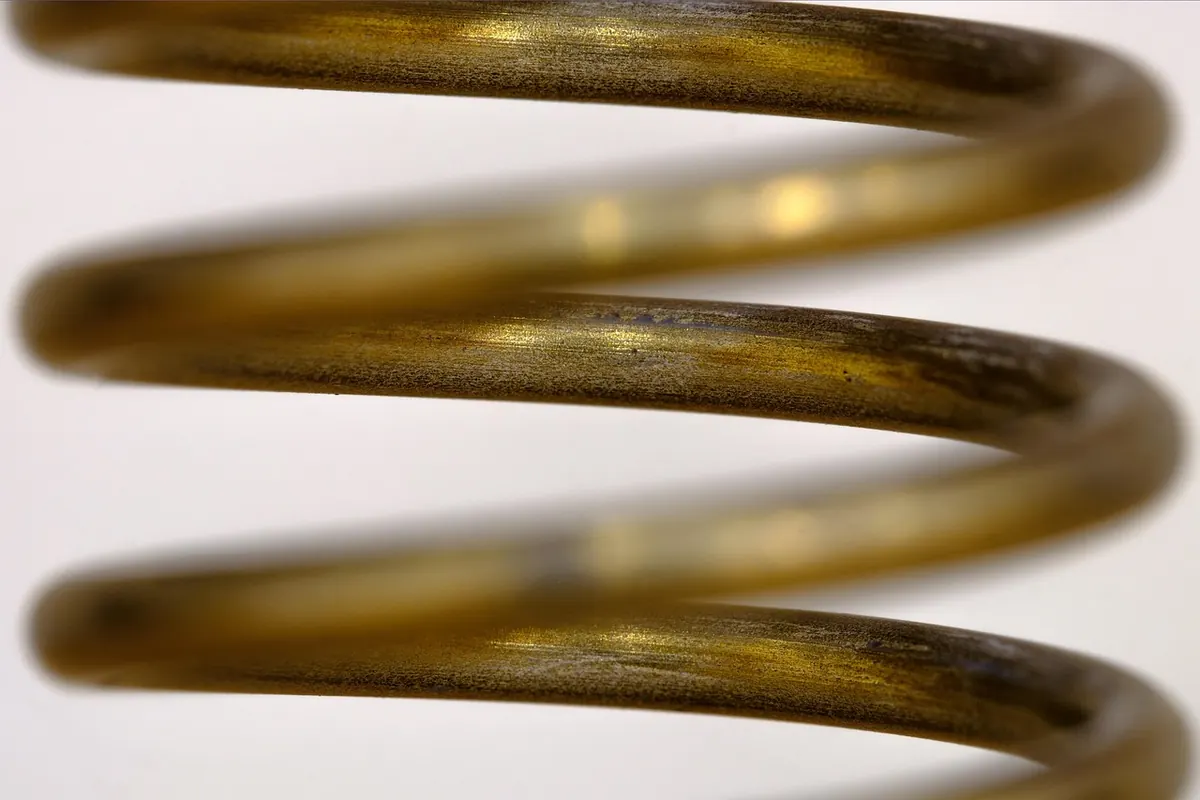
A lamp switch can feel crisp or mushy for reasons that have little to do with the housing. The spring inside sets the effort, the return, and the contact pressure. On an adjustable fixture, a spring decides whether the arm stays where you put it or slowly droops overnight. Material choice is where those behaviors begin, and it is also where many repairs go wrong: a spring that fits is not always a spring that belongs.
For indoor lighting hardware, four families cover most needs: stainless steel, music wire, phosphor bronze, and coated springs. Each has a distinct job. The useful question is not “Which is best?” but “What is this spring doing, and what will it touch?”
Before comparing alloys, describe the spring in plain mechanical terms. Note the force it must deliver, the travel it must allow, the number of cycles it will see, and the space around it. Then add the environment: a dry ceiling fixture is not the same as a bathroom vanity light or a kitchen cabinet hinge. Finally, decide whether the spring is part of the electrical path. That single distinction eliminates many wrong choices.
Write those requirements down before you open a catalog. A sketch with wire diameter, outside diameter, free length, and working travel is more useful than a handful of old springs on the bench.
A useful habit is to separate structural springs from electrical springs on the sketch. Mark the ones that must conduct current, the ones that merely push and return, and the ones that hold a position under load. A spring that must do two jobs at once is a design compromise, and compromises need more testing, not less.
Stainless steel is the sensible first stop for many indoor lighting applications because it resists corrosion without relying on a decorative coating. Grades such as 302 and 304 are common in spring wire; 316 is worth considering where cleaning agents or moisture are more persistent. It handles the damp air around a bathroom fixture, the occasional splash near a kitchen sink, and the general humidity of an unheated room better than bare carbon steel.
It is not automatically the best electrical choice. Stainless is a poorer conductor than copper alloys, so it belongs in return and structural roles rather than sliding contacts. Austenitic stainless is generally non-magnetic, though cold working during coiling can leave a slight magnetic response; that is normal and not a defect. Watch for galling when stainless rubs against stainless, especially in a tight hinge. A different alloy at the wear point or a compatible lubricant can solve it.
A 304 tension spring inside a bathroom vanity light is a reasonable choice. The same spring used as a current-carrying contact in a socket is not. The material is dependable, but it still has to be matched to the job.
Stainless steel is also a good choice for adjustable arms that are handled often, for springs that may see cleaning sprays, and for fittings where a failed finish would be more than cosmetic. It is less appealing when the design needs the highest possible spring force in the smallest wire diameter. In those cases, a high-carbon steel spring may do the mechanical work better, provided the environment is dry enough to protect it.
Music wire is high-carbon steel drawn to a spring temper. It is strong, consistent, and widely available in small diameters, which makes it useful in lamp switches and compact adjustable joints. It takes plating and coating well, so it can be finished for appearance or mild protection. For a pull-chain switch in a dry hallway, or a return spring in a bedside lamp, music wire is often more than adequate.
Its weakness is corrosion resistance. Bare music wire can flash rust after contact with humid air or finger oils, and a thin plating is not a permanent guarantee. If the spring sits in a dry, enclosed mechanism—inside a bedside lamp switch, a hall closet pull chain, or a pendant fitting away from steam—music wire can be a practical, economical choice. If it sits near a bathroom sink, a shower light, or a kitchen window that collects condensation, treat bare music wire as a short-term solution and choose stainless or a properly coated spring instead.
Music wire also demands care during replacement. A heavier wire diameter increases force sharply, and a shorter free length can coil-bind before the mechanism reaches its stop. Two springs that look alike at a glance can feel completely different in use. Keep the original spring as a reference, and measure it before ordering.
Phosphor bronze is a copper alloy with tin and a small amount of phosphorus. It is the material to consider when the spring is also an electrical contact. In a lamp holder, a switch contact leaf, or a socket terminal, the spring must maintain pressure while carrying current. Phosphor bronze does that better than steel because it combines useful spring temper with much better conductivity and reasonable corrosion resistance.
It is not a structural spring material for heavy counterbalances. If the job is to hold a large shade in place, a steel spring is usually stronger for the same space. Phosphor bronze belongs where contact pressure, low resistance, and stable current transfer matter. It also solders and forms well, which helps in small lighting assemblies. Keep contact surfaces clean and free of plating damage; a coated contact is only as good as the coating.
Consider a switch contact spring that has lost its tension. A steel replacement may fit, but it can raise resistance and heat at the contact point. A phosphor bronze spring of the same shape is often the safer repair, provided the contact pressure is close to the original. If a contact spring runs warm, stop and investigate. Heat at a contact usually means resistance, not normal operation.
Coated springs are not a separate base material; they are music wire or another steel with a protective or decorative layer. Zinc plating, nickel plating, black oxide, and painted finishes are common. In indoor lighting, coating can improve appearance, slow mild corrosion, and make a low-cost steel spring acceptable in a dry location. But coating is not a substitute for choosing the right alloy. It adds thickness to wire and coils, can flake at sharp bends, and can wear away exactly where the spring rubs or carries current.
A black-coated music wire spring in a dry pendant may look right and last for years. A zinc-plated spring in a damp basement fixture may rust from the inside out once the coating is scratched. If the spring is part of an electrical contact, do not rely on the coating to conduct. Use a base material such as phosphor bronze and keep the contact areas bare and clean.
When matching a replacement, compare more than diameter. Check wire diameter, outside diameter, free length, coil count, end type, wind direction, and the load at the working length. The same outside diameter with a different wire gauge can be far too stiff or too weak. Measure with calipers, count active coils, and photograph the old spring next to a ruler before it disappears into the mechanism.
After installation, cycle the mechanism by hand several times. The spring should return the part smoothly, without rubbing, coil binding, or a sudden increase in effort. In a current-carrying contact, test only if you are qualified, and look for abnormal heat, flickering, or voltage drop. A spring that fits is a starting point; a spring that behaves correctly under load is the real requirement.
Fit is the beginning of compatibility, not the proof of it.
For most indoor lighting repairs, stainless steel and music wire solve the mechanical jobs, phosphor bronze solves the contact jobs, and coated springs offer a useful finish or a modest cost saving. The right choice starts with the mechanism, not the catalog page.
Photo: Bru-nO / Pixabay

A practical, low-glare guide to lighting a spring-fed pond after dark: where to place fixtures, how to catch moving...
A practical layout guide for building a reading corner around a swing-arm wall lamp, from chair placement and lamp...
October 29, 2026 - Design
October 28, 2026 - Sources
Copyright © 2026 Fari Della Sorgente. All Right Reserved.