Lighting a Spring-Fed Garden Pond for Evening Ambience: Inspiring Ideas
October 30, 2026 - Inspiration

October 29, 2026 - Design

October 28, 2026 - Sources
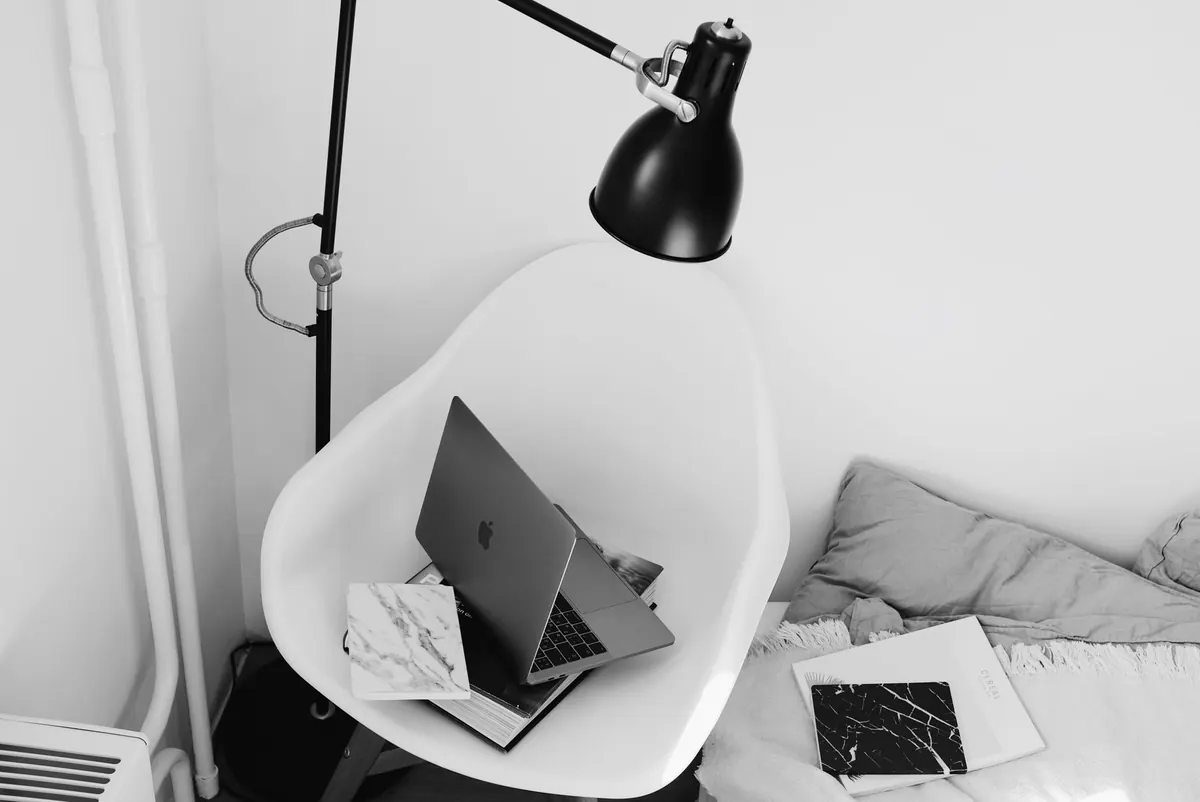
A reading corner usually fails for one of two reasons: the chair is comfortable but the light lands on your forehead, or the lamp is aimed well but there is nowhere to put a cup of tea. A swing-arm wall lamp solves the first problem better than almost any other fixture, because it can reach over the page without taking up floor space. The rest is layout. Get the chair, lamp, table and shelves into a sensible relationship and the corner starts to feel intentional rather than assembled.
It is tempting to fix the lamp first and squeeze a chair underneath it. Work the other way around. Sit in the chair you plan to use, in the place you plan to put it, and notice where your shoulder, elbow and book actually end up. A deep armchair pushes the page farther from the wall than a slim reading chair. A recliner changes the height of your eyes as you lean back. Both details matter more than the lamp’s finish.
Place the chair close enough to the wall for the lamp’s arm to reach, but not so close that the back hits the wall when you settle in. A gap of roughly 10–15 cm behind the chair is usually enough for breathing room and for the lamp arm to pass. If the chair has a high back, check that the lamp head can clear it when swung forward. Low-backed chairs and small wing chairs are easier to light because the lamp can sit beside the shoulder rather than above the head.
Decide which side the lamp belongs on. For most readers, the light should come from the side opposite the dominant hand, so the hand does not cast a shadow across the page. If you write notes while reading, test this with a pen before you commit. A right-handed reader will usually prefer the lamp on the left; a left-handed reader will want it on the right. Reading only? Either side can work, but keep the lamp slightly behind the shoulder rather than directly in front of the face.
A swing-arm lamp is only useful if its arm can put the shade where the page is. Before drilling, measure the arm’s full reach and its fold-back position. Mark the wall plate at a height that lets the shade sit slightly above and to the side of the book, not directly between your eyes and the page. For an average adult in a reading chair, the wall plate often lands somewhere around seated shoulder height or a little above, but your own seated eye level is the better guide. Sit down, hold a book where you would normally hold it, and have someone mark the wall beside your shoulder.
Then adjust the arm so the shade sits roughly 30–45 cm from the page and 30–40 cm to the side of your shoulder. Aim the beam across the page at a slant rather than straight down. Straight-down light makes the centre of the book bright and the edges dim; angled light spreads more evenly across the spread. If the shade has a swivel head, tilt it so the bottom edge shields the bulb from your seated view. You should be able to see the page clearly without seeing the light source itself.
Pay attention to the arm’s tension. A swing-arm lamp depends on spring tension and friction joints; if the arm drifts down or droops when you let go, the corner will fight you every time you turn a page. A well-adjusted arm stays where you leave it with a light touch. If the lamp is new, check that the springs are seated correctly and that the joints are not over-tightened. If it is older, a slight adjustment or replacement of worn parts may be more sensible than propping the arm with a book.
Glare is not just a bright bulb in the eye. It is also the reflection of the lamp on glossy paper, the hot spot on a dark wall behind the shade, and the contrast between a very bright page and a dark room. Start with the shade: an opaque exterior with a pale interior throws light down and across without turning the fixture into a visible bright spot. A frosted bulb or a diffuser softens the edge of the beam. Exposed filament bulbs can look handsome, but in a reading corner they are usually better deeply recessed or avoided altogether.
Check the sightline from your normal reading posture. Lean back, look up, and see whether the bulb or the bright inner shade enters your field of view. If it does, move the head forward, lower the tilt, or shift the wall plate a few centimetres. Then test with the glossiest book or magazine you own. A slight change in the lamp’s angle can remove a reflection that no amount of bulb-swapping will fix. Keep the lamp away from mirrors, glass frames and television screens that can bounce light back into the corner.
Contrast matters too. A single bright lamp in an otherwise dark room makes the page feel harsh. A little ambient light—from a ceiling fixture on a dimmer, a floor lamp behind the chair, or a warm wall light on another wall—softens the transition. You do not need much. The reading lamp should still be the brightest thing near the page, but it should not be the only light in the room.
The side table should be easy to reach without twisting or leaning forward. As a rule, the top should sit close to the height of the chair seat or slightly above it, so your hand falls naturally onto a cup, glasses or a bookmark. A small round table, roughly 35–45 cm across, is often enough for a reading corner. If space is tight, a narrow rectangular table or a slim ledge behind the chair can work, provided it does not block the lamp arm.
Put the table on the side where your hand naturally rests, not necessarily under the lamp. Keep it a few centimetres away from the chair so you can pull it forward without scraping. The table should not sit inside the lamp’s swing arc; if the arm knocks a mug every time you move it, the layout is wrong. Route the lamp cable so it does not cross the tabletop or hang where a hand will catch it. A small tray on the table corrals the small things—reading glasses, a pencil, a coaster—and keeps the surface ready for a book.
Shelving can make the corner feel finished, but it can also crowd the lamp and cast shadows. Keep shelves shallow, around 20–25 cm deep, so they do not loom over the chair. A low bookcase beside the chair is usually more useful than a tall one directly behind it: you can reach a book without standing up, and the lamp arm has room to move. If you want shelves above the chair, make sure they are high enough to clear your head when you lean back and far enough back that you do not feel them pressing down.
The critical test is the lamp’s full sweep. Move the arm through every position you might use—folded back, reaching forward, angled across the page—and watch for collisions with shelf edges, picture frames and the chair back. A swing-arm lamp needs a clear half-circle of movement. If a shelf blocks that arc, move the shelf rather than forcing the lamp into one position. The corner should adapt to the reader, not the other way around.
Daylight flatters almost any reading corner. The real test comes at night, when the lamp is the main source and the room behind it falls away. Use a warm-white bulb—somewhere in the gentle, domestic range rather than the cold blue-white of a workbench—and choose one with good colour rendering so book covers and paper look natural. A dimmer is useful if the lamp is also the room’s evening light. If dimming is not possible, a lower-output bulb plus a separate ambient source usually gives more control than one very bright task lamp.
Read for twenty minutes before you decide the layout is finished. Small print, a heavy hardback, a thin paperback and a magazine all behave differently under the same lamp. Notice whether you are squinting, tilting the page, or shifting in the chair to avoid glare. Those small movements are useful signals. A 5 cm change in lamp height or a 10-degree tilt can be more effective than buying a new shade.
Wait until evening, turn off the main light, and sit down with the book you are actually reading. Move the lamp arm slowly through its range and find the position where the page is evenly lit, your hand does not cast a hard shadow, and the bulb stays out of your eyes. Then check the practical details: the table within reach, the shelf clear of the arm, the cable relaxed. Leave it for a week before making more changes. A reading corner is not a showroom arrangement; it is a small piece of furniture that has to work when you are tired, comfortable and halfway through a chapter.
Photo: ready made / Pexels

A practical, low-glare guide to lighting a spring-fed pond after dark: where to place fixtures, how to catch moving...
A practical field guide to testing a natural spring for household use: check bacteria, nitrates, turbidity and flow,...
October 29, 2026 - Design
October 28, 2026 - Sources
Copyright © 2026 Fari Della Sorgente. All Right Reserved.