Lighting a Spring-Fed Garden Pond for Evening Ambience: Inspiring Ideas
October 30, 2026 - Inspiration


October 29, 2026 - Design
October 28, 2026 - Sources
A spring can look impossibly clean. The water arrives cold, clear, and steady, and it is easy to assume that nature has already done the filtering. That assumption is where trouble usually begins. Clear water can still carry bacteria, nitrate, or sediment that you cannot see or taste. Testing a natural spring is less about one clever gadget and more about a sequence: inspect the source, sample for bacteria, screen the chemistry, watch clarity and flow, and call in a laboratory when the stakes are high.
If the spring feeds a kitchen tap, a holiday cottage, or a household with children or elderly relatives, treat the water as a small private supply that needs evidence, not intuition. The steps below are practical, repeatable, and designed to help you decide what is safe to do next.
Before you fill a single bottle, walk the ground above and around the spring. Look for animal pens, septic tanks, fuel storage, compost heaps, roads, recently spread manure, and bare soil that sheds runoff toward the source. A spring is only as clean as the land that feeds it. Note anything that could enter the water after rain, because a source that runs clear in dry weather can change within hours of a storm.
Inspect the spring box, collection chamber, pipe, and overflow. Look for cracks, loose covers, rodent droppings, algae, leaves, and signs that surface water is flowing into the chamber rather than rising from below. If the spring is open, shallow, or unprotected, assume that contamination is possible until sampling proves otherwise. Record the date, weather, recent rainfall, and any work happening uphill. A simple notebook or phone note is enough, and it will make later results far easier to interpret.
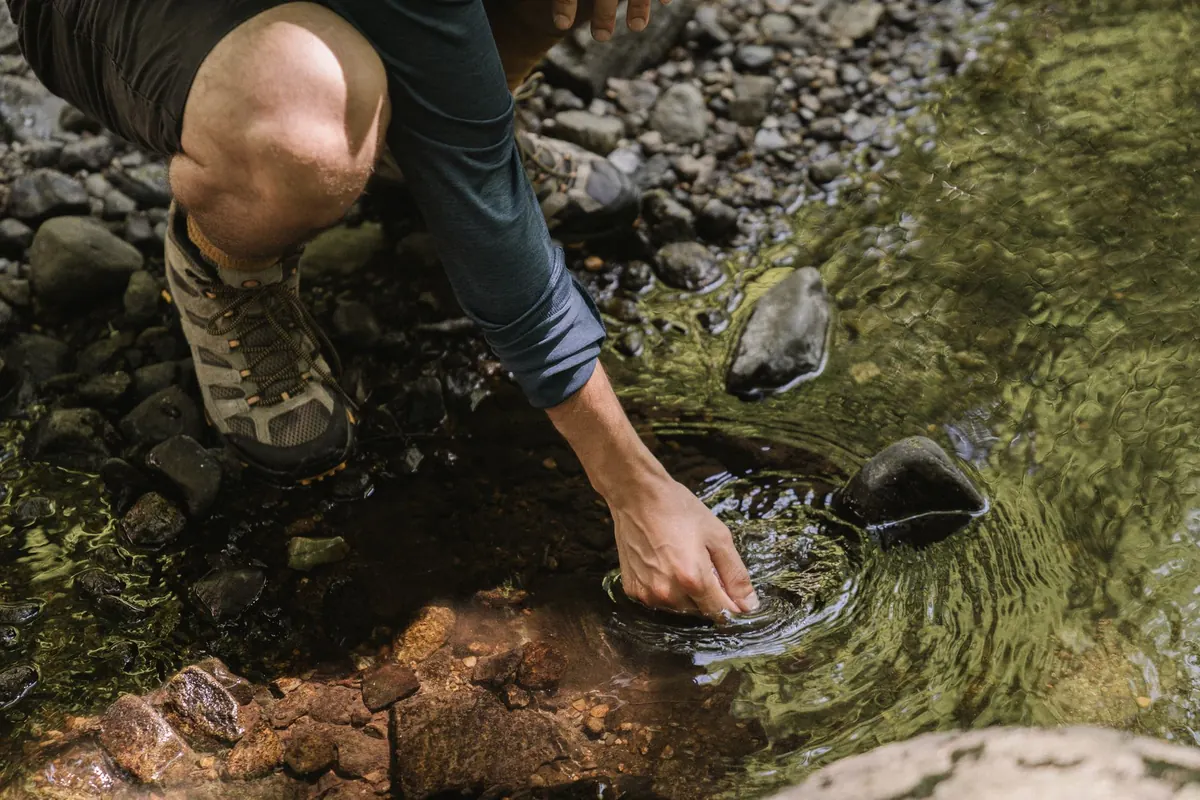
Bacteria are the first concern because the risk is immediate and the evidence is invisible. You cannot smell E. coli, and a home test strip is not a reliable substitute for a laboratory culture. Use a sterile bottle supplied by an accredited laboratory, and follow its instructions exactly. The usual steps look like this:
Ask for total coliform and E. coli results. Total coliform can suggest that the source is open to soil or surface water, while E. coli is a stronger signal of fecal contamination. If E. coli is present, do not drink the water untreated. Stop using it for drinking, cooking, brushing teeth, or preparing infant formula until you have taken advice from your local health authority or a water treatment professional. A single clean result is reassuring, but it is not a permanent guarantee; springs change with seasons, weather, and land use.
Nitrate is a common concern in spring water because it can come from fertilizer, manure, septic systems, and animal waste. It does not usually announce itself through taste, smell, or colour. Home test strips can be useful as a rough screen, but confirm any questionable result with a laboratory. This matters especially if the water is used for infant formula or by anyone with specific health concerns; ask a health professional or water specialist before relying on the supply.
A basic laboratory suite often includes nitrate, nitrite, pH, hardness, and turbidity, with additional tests for metals or pesticides where local conditions justify them. Old pipework may call for lead or copper testing. Land used for intensive agriculture may call for pesticide screening. Compare results with your local drinking-water standard rather than a generic online number, and keep the report with your spring records.
Turbidity is the cloudiness caused by suspended particles: silt, clay, organic matter, or tiny organisms. Fill a clean glass jar with spring water and let it stand for an hour or two. Sediment on the bottom, a tint, or a lingering haze is a prompt to investigate. Repeat the check after heavy rain. If the water turns cloudy when the ground is wet, surface water is probably finding a path into the spring.
Turbidity matters beyond appearance. Particles can shelter microbes from disinfection and clog filters, UV units, and small pumps. A laboratory can give you a measured turbidity result, which is more useful than a yes-or-no glance. If turbidity rises, protect the source first: repair the spring box, divert runoff, seal the cover, and remove anything decomposing nearby. Filtration may help, but it is not a substitute for a sound source.
Flow rate tells you whether the spring can meet household demand and whether treatment equipment will work properly. Use a measured container and a stopwatch. Fill a 10-litre bucket at the outlet, note the time, and repeat two or three times. Divide the volume by the minutes to get litres per minute, then multiply to estimate daily output. Test in the morning and evening, and again in wet and dry seasons.
Do not size a pump, storage tank, or UV unit on one good day. A spring that gushes in spring may slow to a trickle in late summer. Check how quickly the collection chamber recovers after drawdown, and look for overflow that runs continuously or, conversely, a chamber that never fills. If flow is marginal, storage and careful demand management matter as much as treatment.
Some situations call for a proper laboratory report rather than a quick field check. Send samples when you first intend to use the spring for drinking or cooking, after flooding or major earthworks uphill, when taste, odour, colour, or clarity changes, and when anyone in the household or among guests becomes ill with a stomach complaint. Also test after new animal activity, septic work, or agricultural changes in the catchment.
Choose a laboratory accredited to local standards, ask which sample containers and holding times apply, and request the tests that match your risks. Ask the laboratory to explain any result you do not understand. If contamination is confirmed, seek advice before drinking the water or spending money on treatment equipment.
Testing works best as a habit, not a one-off event. Keep a sheet with dates, weather, flow readings, turbidity notes, and laboratory results. Check clarity and flow monthly, sample bacteria and nitrate at least annually, and retest after storms or any change in the catchment. Protect the spring box, divert surface runoff, and keep animals and chemicals away from the source. If the water is for a vulnerable household or you are uncertain about a result, ask a qualified water professional or your local health authority. Clear water is a starting point, not a result.
Photo: Katya Wolf / Pexels

A practical, low-glare guide to lighting a spring-fed pond after dark: where to place fixtures, how to catch moving...
A practical layout guide for building a reading corner around a swing-arm wall lamp, from chair placement and lamp...
October 29, 2026 - Design
October 28, 2026 - Sources
Copyright © 2026 Fari Della Sorgente. All Right Reserved.